Space science
The universe can disappear because of
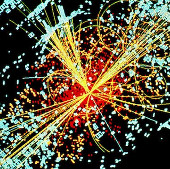
In July last year, physicists from the European Atomic Research Organization (CERN) announced they had found a particle with the same characteristics as the Higgs partic…
Browse ScienceInfo articles and explainers related to Particle Accelerator.
63 published items.
In July last year, physicists from the European Atomic Research Organization (CERN) announced they had found a particle with the same characteristics as the Higgs partic…
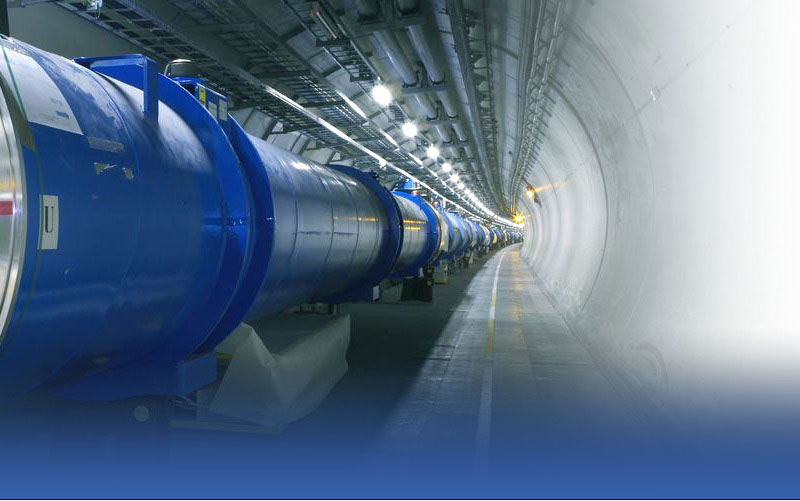
Physicists all over the world on November 16 launched an important program to turn the Large Grain Accelerator (LHC), which is now in a 27km long tunnel near the Swiss-F…

Scientists from the European Atomic Research Organization say they have discovered a type of particle that can move faster than light.
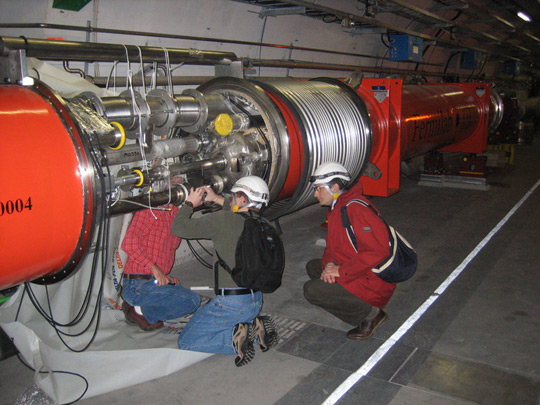
On Monday, December 6, 2010, scientists stopped all experiments on the world's largest particle accelerator LHC. On the website of the LHC, there are large words
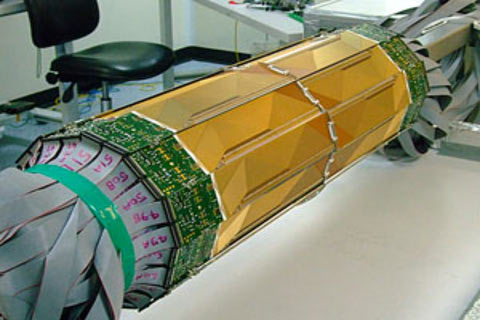
Reuters on December 6 said that European scientists have just announced the creation and capture of antihydrogen atoms in an ideal magnet tube.
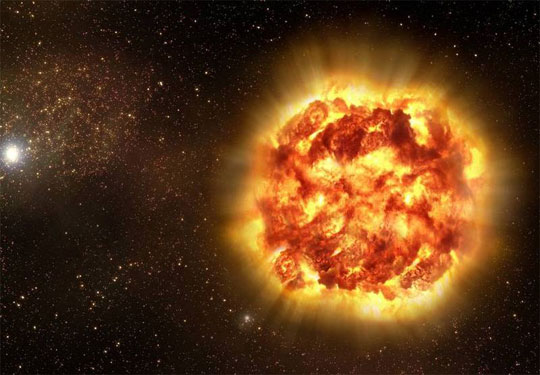
Right after the Big Bang, the universe was just a very hot liquid, with temperatures higher than 10,000 billion degrees C.
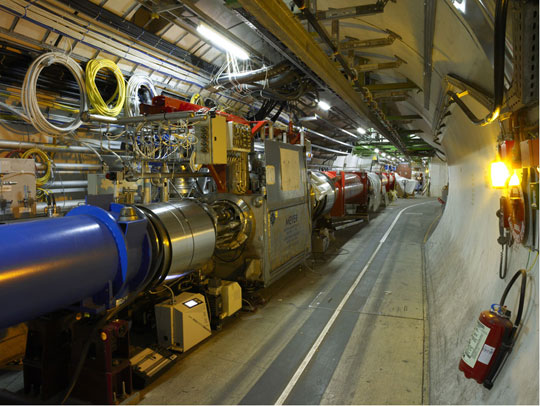
Successful implementation of inter-collision experiments
When you were a kid, did you ever try to crash two toy cars to see what happened? If so, you have understood somewhat the principle of operation ...

Scientists at the European Center for Atomic Research (CERN) have created 10 million explosions in a large particle accelerator in a week.
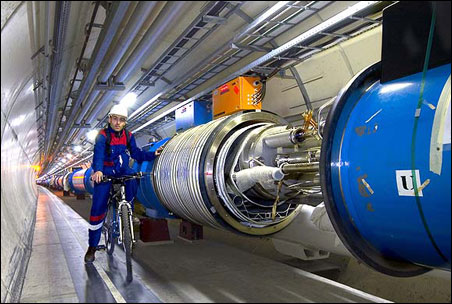
The large particle accelerator re-starts last night after a problem more than a year ago, and will begin the process of simulating the Big Bang explosion.

The world's largest particle accelerator (LHC) of the European Nuclear Research Center (CERN) will resume operations next September.

Some assumptions about the Earth's day of destruction lacked scientific evidence, including Issac Newton's hypothesis.

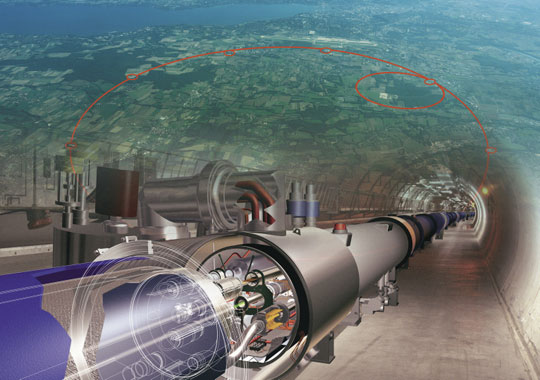
LHC is the world's most powerful particle accelerator, having a circumference of 27km, buried 100m deep underground in the French-Swiss border area.
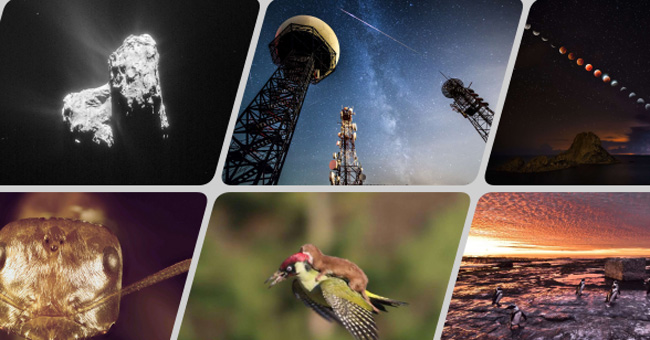
The year is coming, now is an opportunity for us to look back over the past year with 50 photos representing 50 science and technology events.
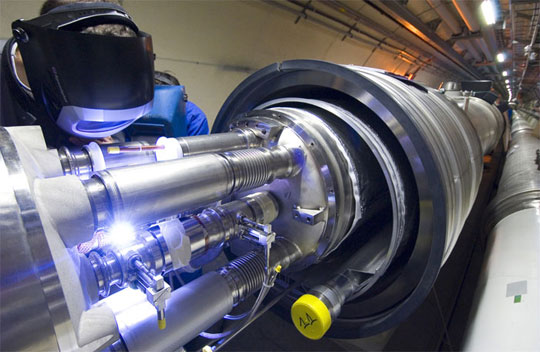
The European Nuclear Research Center has recorded the first collisions between lead ion particles in the Large Particle Accelerator (LHC).